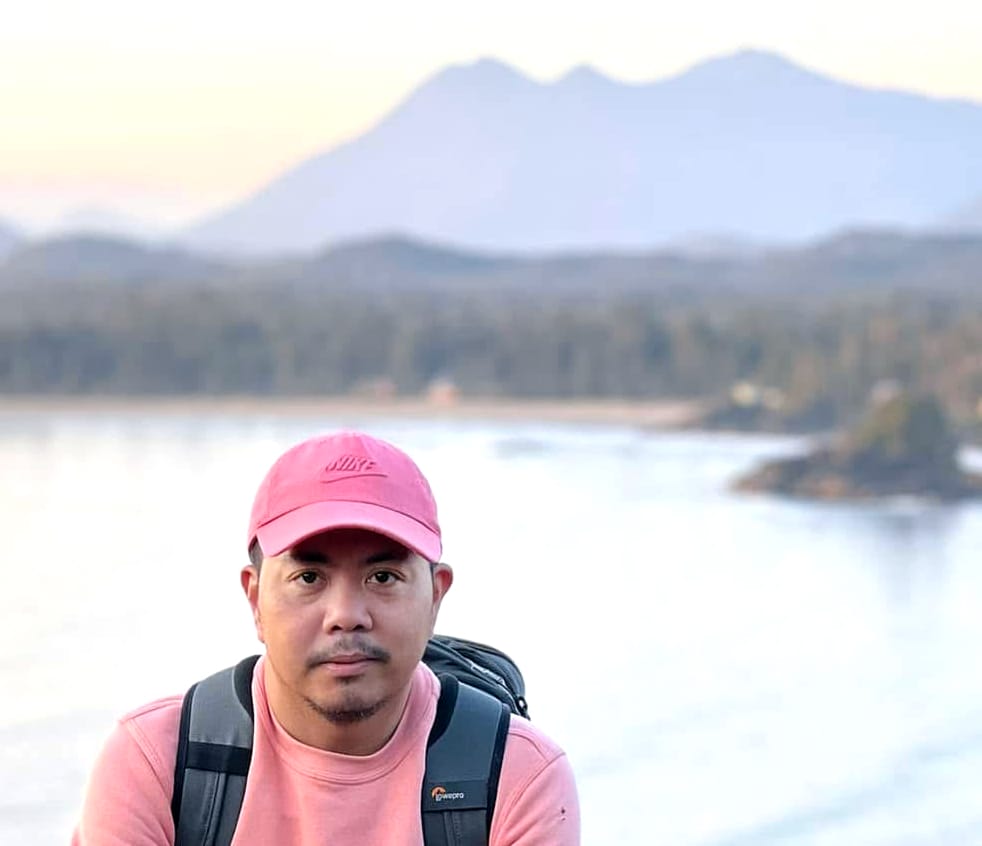
Inside the BC Ferries refit yard: Christine finds a home for her craft
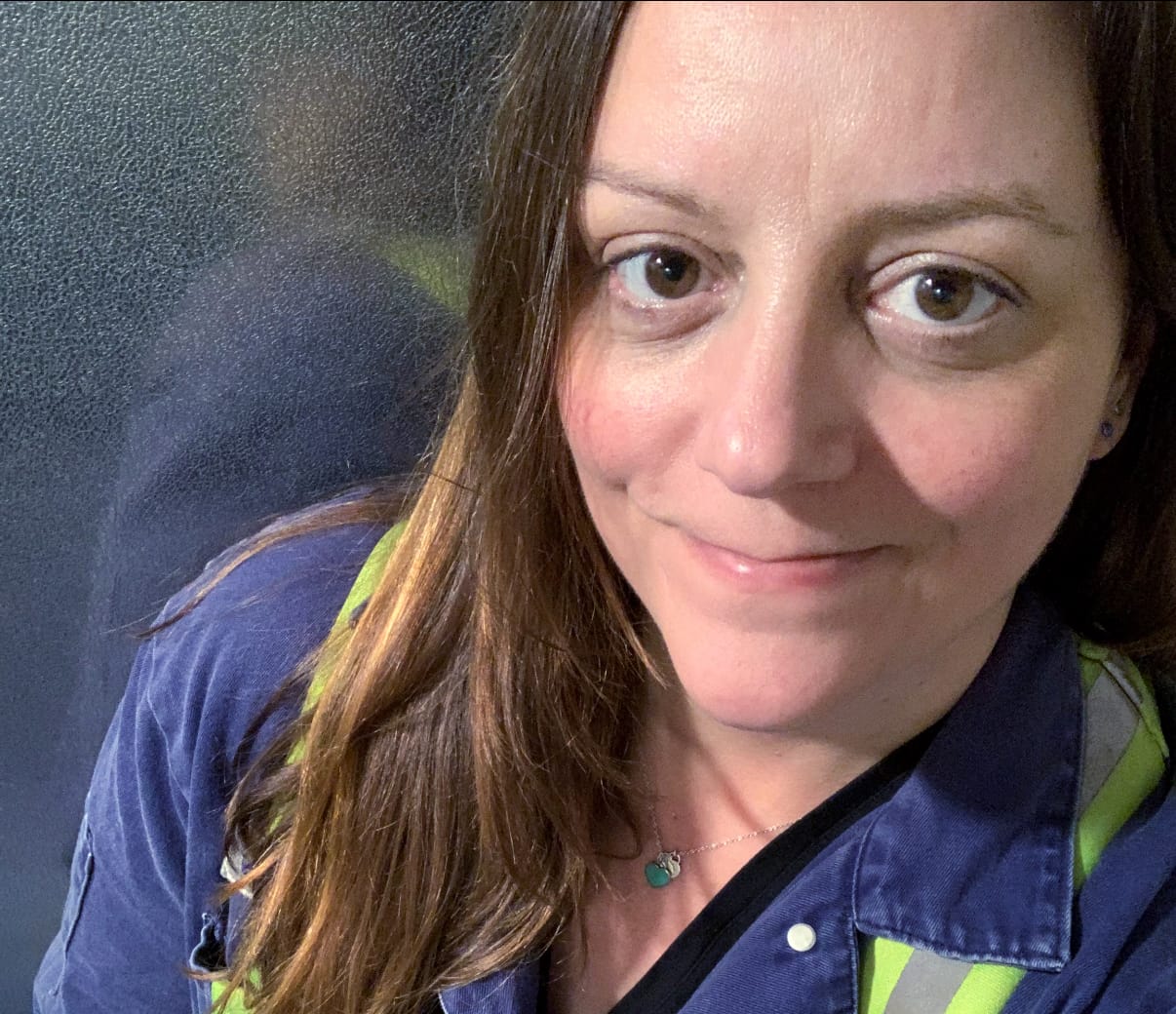
I joined BC Ferries because I wanted a place where my trade mattered and my skills would be taken seriously. As a woman in the trades, that kind of equal footing is important. The work here is challenging, hands-on and meaningful, and that’s what’s kept me coming back.

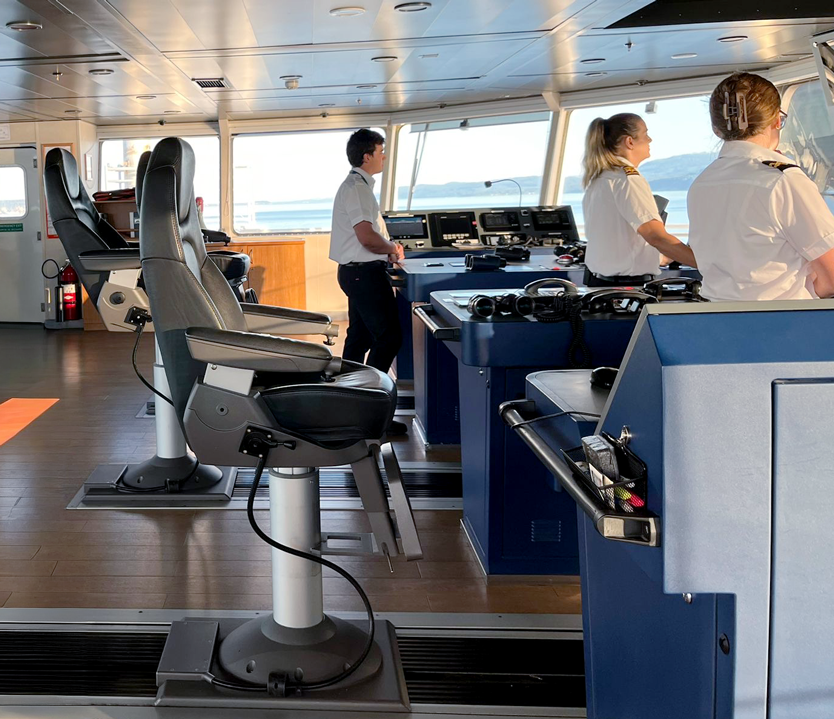
I’m an upholsterer by trade. Before ferries, I did custom fine furniture. At Deas Dock, the work is totally different. I make patterns, sew custom covers for navigation equipment and build whatever the ships need. Engineers will dream something up and we take it back to the shop, figure it out and make it. I like the challenge. It’s a real craft and a real trade, and it keeps my brain working. Pattern making is one of my strengths.

There are only four upholsterers in the whole company. Most people don’t know we exist. Even people around the fleet are surprised. But every refit season, from September to June, we touch almost every vessel. We fix every ripped seat, go through all the cafeterias and lounges and take care of anything fabric on board

I love it when someone brings us something new and we get to design it from scratch. Turning an idea into something that fits, works and holds up on a working vessel is satisfying. Those are the moments where I think, “My brain made that.” I feel respected for my skill and get to use my trade every day in a way that challenges me.

Working in a trades yard as a woman has its challenges. You have to earn your respect. Once people see your skills, you’re accepted, but it’s not automatic. I’d like to see more women in the trades and at Deas Dock. It would shift the environment for everyone in a good way. The women who are here are amazing and really skilled.

I’d never been in a union job before BC Ferries, so getting involved was new to me. But our work can be dangerous. People put in long, hard hours around heavy equipment, and you need someone looking out for the workers. For me, being active in the union is about rights, safety and making sure the conditions on the ground match what’s on paper.

Christine Shakespeare, president, Deas Dock Component
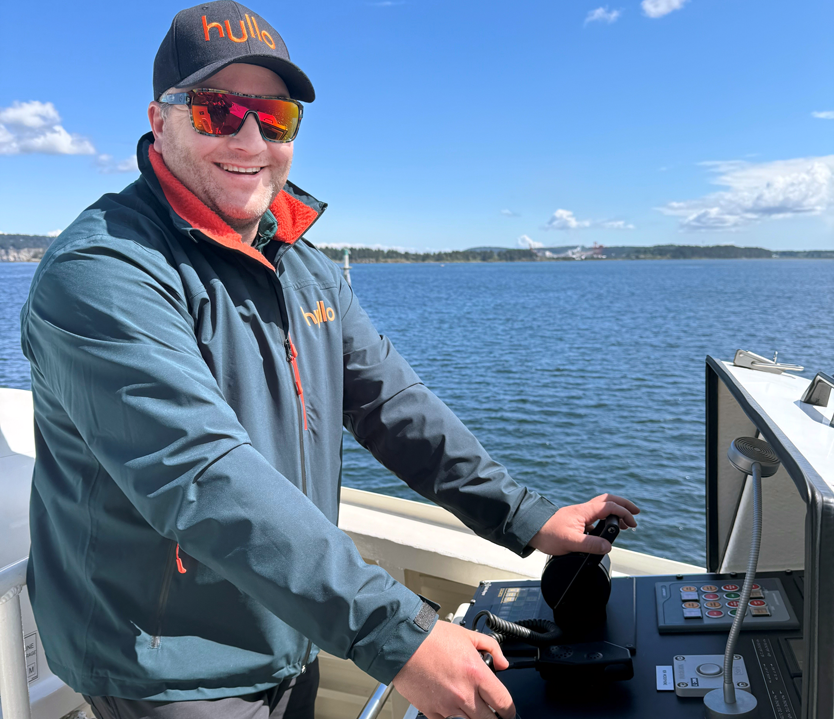
Building from the ground up: Darcy Morgan’s Hullo story

Being born and raised in rural Nanaimo, I started in my dad’s footsteps as volunteer firefighter in 1997 and later got all my structural firefighting, hazmat and first aid certifications. The marine industry was never a thought for me until  I applied to BC Ferries in 2010. I worked as a terminal attendant, equipment operator, OFA and terminal supervior.

In 2015, I got a union scholarship for the Bridgewatch Rating Program, did a summer term on the Coastal Renaissance and then moved into a watch position on route two, the Queen of Cowichan. I stayed there until June 2023, when I left for Hullo.

Hullo offered something new and fresh. It felt like a chance to help build something from the ground up and create a service that’s vital for the mid -island. The idea really hooked me, and does to this day.

I really enjoy my job and work with a very diverse group. Some folks have 25 years in the industry and some have 25 minutes. I get to share what I know and watch new people grow, while also learning from everyone I come into contact with.

Most people don’t realize how long our days can be. Our average shift is about 13 hours. If you take the 7 am sailing to Vancouver and come home at 5:30 pm, it’s the same crew bringing you back. We work fewer days a week, but the days themselves are quite long.

My job is also different from the big ferries most people know. Conventional ferries run around 12 to 20 knots. Our service speed is closer to 34. Things come at you fast. You’re close to the water and you’re moving quickly, so the focus and intensity are really high.

Our deckhands do everything. They moor the ship, deal with emergencies, serve coffees, help people who feel sick, handle medical calls and deal with security issues. They’re incredibly well rounded. People don’t always see or appreciate how many different hats they must wear in a day.

Working for a small, start-up company can have its challenges. With collaborative approaches between workers and management, creative solutions can be found. Most challenges are firsts. People really tend to step up, and make sure to keep things moving, finding creative ways to mitigate sick calls and keep boats running as to not interrupt a passenger’s day.

Our biggest challenge right now is scheduling. We run a lot of late-night event sailings for concerts and hockey games which creates a unique challenge of moving crew and sailings around to meet the demand. Being that a lot of events are scheduled on the go, scheduling for the future can prove difficult.

For the customers who rely on us, keeping communication open is key. Weather, technical issues, staffing, whatever it is, people just want updates. We’re already doing a great job in that area but it can always get better.

I never thought I’d end up in the marine industry, but once I started, it just felt right. Hullo’s given me a chance to grow, to lead and to help build something that matters to the community. I’m proud to be part of it. And I’m still a volunteer firefighter: now I’m the assistant fire chief at East Wellington Fire Department on Jinglepot Road.

Darcy Morgan, Chief Officer (Mate) Hullo Ferries

Look West invests in ships. Now it needs to invest in the people who sail them

B.C.’s new Look West strategy sets out a bold vision: more shipbuilding, stronger ports and a bigger maritime footprint for B.C. That part is great. We all want vessels built here, serviced here and repaired here. It’s good for jobs, good for skills and good for the coast.

But the plan has a big blind spot. There’s a lot of talk about steel and shipyards and almost nothing about the people who sail the ships.

What’s happening on the water

Right now employers aren’t training enough homegrown deck officers or engineers. Ferries get cancelled without enough certified crew. Students who want to move up can’t get sea-time. Marine schools are full, outdated and underfunded. And most young people have no idea these careers even exist.

It’s not for lack of talent. Becoming a skilled mariner is expensive, slow and full of structural barriers. Ship’s officers regularly pay thousands out-of-pocket for mandatory courses, fight rigid schedules and must often step out of paid work just to progress within the seafaring profession. That’s part of why BC Ferries has turned to internationally credentialed officers as a stopgap. Retention is mixed because the long-term pathways still aren’t there for local seafarers.

What B.C. needs next

B.C. needs a proper apprenticeship-style pathway from entry-level deckhand to mate, master and from engine room assistant to chief engineer, with paid training time and sea-time guarantees. Professional seafarers need a mariner education fund that covers the real costs of progression, not just a tiny portion of tuition and an uncertain career path. British Columbia and Canada need marine schools with enough instructors, classrooms and simulators to meet the demand.

Look West gets us halfway there. Investing in seafarers is the difference between a strategy that looks good on paper and one that will keep the coast moving for decades to come.


84 per cent of British Columbians want a plan to keep shipbuilding jobs in B.C.


NANAIMO — A new poll shows overwhelming public support for rebuilding B.C.’s shipbuilding industry.

The poll, conducted by Leger and commissioned by the Build Them Here Shipbuilding Coalition, shows eighty-four per cent of British Columbians want the provincial government to develop a plan to keep shipbuilding work and expertise in the province.

Sixty-one per cent say ferries should be built in B.C. even if it costs more, compared to only 23 per cent who prefer the cheapest option offshore. Eighty-one per cent want more information on the process that led BC Ferries to outsource four new ferries to China.

“British Columbians get it. Building ships here means good jobs for workers and lasting benefits for communities,” said Eric McNeely, president of the BC Ferry & Marine Workers’ Union (BCFMWU). “You can’t build an industry by outsourcing it.”

“This research confirms what workers have been saying all along,” said Brynn Bourke, Executive Director, BC Building Trades (BCBT). “Investing in B.C. shipyards builds more than ferries, it builds futures.”

The results come from an online survey conducted November 7 to 9. The poll included 1,035 adults across B.C. and was weighted to reflect the province’s population by age, gender, region, education and household makeup. While online surveys don’t have a traditional margin of error, a random sample of this size would have a margin of about ±3%, 19 times out of 20.

The Build Them Here Shipbuilding Coalition comprises unions representing shipyard workers, tradespeople and ferry workers, including: BCBT, BCFMWU, BCGEU, Marine & Shipbuilders Local 506, Heat & Frost Insulators Local 118, IAM 250, IBEW Locals 213 and 230, Ironworkers Shop Local 712, IUOE Local 115, MoveUP, Sheet Metal Workers’ Local 280, Shipyard General Workers Federation, UA Local 170, Unifor, United Steelworkers (USW) and USW District 3.

-30-

MEDIA CONTACT Rachel Garrick | Communications Officer | BC Ferry & Marine Workers’ Union | 604-561-3703 | rachelgarrick@bcfmwu.com

➡️ Leger poll data

BC Ferries is leaving British Columbians waiting

Recently, coastal mayors criticized BC Ferries for leaving ferry-dependent communities in the lurch, pointing out that cancellations and delays have increased while service has declined. BC Ferries’ response, that smaller routes operate at a deficit, was revealing.

President Eric McNeely recently shared his perspective on what needs to change to make sure BC Ferries serves coastal communities better.

‘We don’t measure hospitals or highways by profit and loss, and we shouldn’t treat ferry routes that way.”

President McNeely points out that Premier W.A.C. Bennett never intended our ferry system to run as a business. Rather, he saw it as a “marine extensions of the highway system,” designed to connect communities up and down the coast.

Instead, we’ve ended up with a private company that delivers a public service without public accountability.

“The fix is straightforward. Replace political appointees with a genuine public-interest board that’s independent, qualified and transparent. With real oversight, BC Ferries can be held accountable. This requires legislative change. The Coastal Ferry Act must be amended to reflect the needs of residents, not the demands of a failed business model.”

Read the rest of President McNeely’s thoughts here.


Statement on Canada Pulse Insights poll

We get it. People want new ferries now.

We know better than most that BC Ferries needs new ships. We operate and repair the ships you rely on every day.

We also know that when we build ferries overseas, we lose thousands of good jobs, apprenticeships for young people and hundreds of millions in local tax revenue.

A poll that only asks if people want to cancel a deal offers a false choice. Ask if they want to lose 10,000 jobs and a billion dollars in local wages, and you’ll get a different answer.

It’s easy to say yes to a poll question when you’re only told about penalties and delays. The real penalty is losing jobs, tax revenue and the ability to build our own ships.

That’s money that should be putting pay cheques into our communities, not creating jobs overseas.

This poll surveyed 657 people in Metro Vancouver. It didn’t ask the people who work on ferries, build them or depend on them every day.

The simple fact is we lose more than we gain with this deal, and we’ve known this for some time.

A 2014 Columbia Institute study found for every 100 shipyard jobs, another 135 are created across local suppliers and service industries.

In 2024 the BC Chamber of Commerce urged the province to include a “build-in-B.C.” requirement for new ferries, noting it would create up to 9,800 jobs, $1.7 billion in wages, $1.1 billion in GDP and $234 million in provincial tax revenue.


Category Estimated loss to B.C.
Wages $1.2 billion
GDP $1.1 billion
Jobs 9,800
Tax revenue $234 million

For decades, every vessel in the BC Ferries fleet was built right here in B.C. Then we stopped betting on British Columbians and started losing control of our industry and our supply chains.

Let’s make sure this is the last time public money and good jobs leave our shores

Write to your MLA today.

Keeping the island’s shelves stocked, one trailer at a time

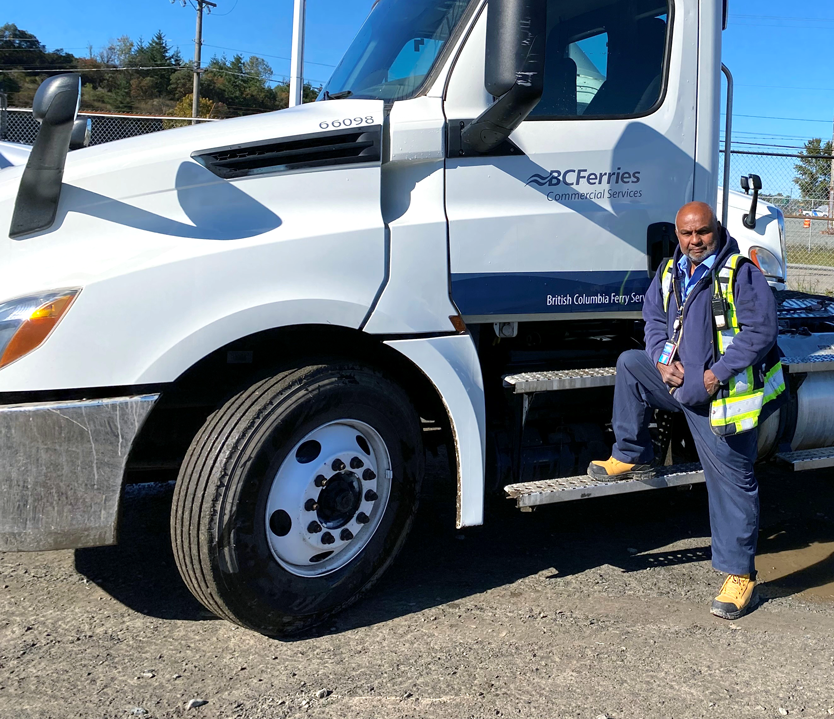
I came to BC Ferries about sixteen years ago, but it wasn’t really my idea. I was working long hours on the highway when a friend called to offer me a job. I said no because I already had one. Then he went behind my back and called my wife. She told me I needed a change. She was right. I was working eighteen-hour days. She wanted me home safe, and I wanted peace in the house, so I said yes. I went to see him at Duke Point, gave notice at my old job, and started soon after. I’ve been here ever since.

I move food trailers that come over from Vancouver to the island. Every day we move about sixty trailers full of food, lumber, fish and other supplies. Everything people rely on. If you buy it in the grocery store, it probably came on off the ferry. Most passengers never think about our trailers as supply lines when they’re waiting in line.

If there’s ever an earthquake or big emergency, our trailers are cleared to go first. Food, water and medicine move before anything else. We’re a lifeline for the island, and that feels good to know. The faster we move goods, the faster they reach stores, restaurants and families. Other sea transport services for cargo can take twice as long, but we can turn it around in two and a half hours.

It’s a busy job, but every now and then there’s a moment that reminds me why I love it. A few years ago, an older woman couldn’t get her car started at the terminal. She thought the battery in her key fob was dead, so I took mine apart, gave her my battery and it worked. She was so grateful she sent a letter to the terminal manager. It wasn’t a big thing to me, just helping someone get home. But it feels good to help people.

I’ve worked in transport forty-five years. BC Ferries will probably be my last stop before I retire. I’ve enjoyed working with my colleagues, the shore crews and everyone on the ships. We’ve had some good laughs and plenty of stories to go around. It is always sad to lose someone that you have worked with as well.

I’m proud of what I do. Every trailer I move means full shelves, hot meals and steady work for people across the island. That’s something to be proud of.

Raj Ali, Local 2 Commercial Services Driver

MEDIA RELEASE | Ferry workers report abuse and threats ahead of holiday travel

For immediate release
October 10, 2025

Ferry workers report abuse and threats  ahead of holiday travel

NANAIMO — As Thanksgiving weekend approaches and terminals brace for record traffic, a survey of BC Ferry & Marine Workers’ Union members shows crews are facing disturbing levels of abuse from passengers.

“Behind every sailing is a crew doing their best to get British Columbians where they need to go. They shouldn’t have to fear being screamed at, spat on or threatened in the process,” said Eric McNeely, union president.

More than 80 per cent of respondents said they’ve been threatened with violence on the job while 92 per cent have witnessed it. Nearly 65 per cent say the incidents have affected their mental health. Nearly half of respondents said violence or aggression at work has made them consider quitting.

“Protecting workers isn’t optional. Lose them, and the whole system sinks,” said McNeely.

While most workers know how to report violence on the job, only one in four believe the company takes incidents seriously when reported. The union is calling for stronger enforcement of safety policies and real consequences for passengers who abuse or threaten workers.

“We need BC Ferries to back up our crews,” said McNeely. “It’s easy. If you threaten a worker, you don’t sail.”

McNeely said the message is simple, but so is the reminder to the public: “Ferries will be packed this weekend. Patience and kindness go a long way. Our members are out there in every weather condition, making sure you get where you need to safely.”

-30-

MEDIA CONTACT
Rachel Garrick | Communications Officer | BC Ferry & Marine Workers’ Union
| 604-561-3703 | rachelgarrick@bcfmwu.com

The BC Ferry & Marine Workers’ Union represents more than 4,500 ferry and marine workers across British Columbia. From deckhands and terminal workers to engineers and stewards, we keep the coast moving.

Almost 10,000 jobs lost; leaked report shows B.C. could have built ferries

The leaked Seaspan report confirms what we’ve said all along: BC Ferries vessels could and should be built in British Columbia. Instead of investing at home, leadership is focussed on sending billions overseas, ignoring nearly 10,000 jobs, $1.1 billion in economic activity and $234 million in tax revenue.

This was a failure of leadership. Without Canadian content rules, local yards couldn’t compete against heavily subsidized foreign labour. Other countries build capacity by phasing in work. The report showed how B.C. could have done the same, starting with outfitting, then partial builds, then full builds.

Canadian shipyards didn’t refuse to bid because they lacked capacity. They stepped back because the process prioritized rock-bottom prices. As George McPherson of the Shipyard General Workers’ Federation told the federal transportation committee last week, preparing a bid is a massive investment. No yard will waste resources when there’s no hope of winning.

Public feedback gathered by the BC Ferries commissioner earlier this year showed strong support for building here at home. British Columbians were clear: our money, our shipyards. To suggest customers only want the cheapest ferries erases what the commissioner actually heard.

Canadian workers cannot compete on cost against a state-subsidized industry that relies on low wages and poor labour standards. Focusing on $230 million in refit work over the life of these vessels ignores the billions in jobs, taxes and supply chain growth that could have stayed in B.C.

Once again, BC Ferries’ broken governance model has failed to protect the public interest.

The path forward is still open. The last vessels of this program should go to B.C. yards, with real Canadian content rules. British Columbia deserves ferries built here, by us, for us, for generations.


Our union, our responsibility: Pee-Jay gives back

I’ve been with BC Ferries for about seven years. I came to Canada as a temporary foreign worker and started out working at Tim Hortons. After I got my permanent residency, I was looking for something more stable, something I could build a life around. Friends told me, “Be patient, BC Ferries is a good job, good pay, strong union.” So I kept at it. Eventually, I got hired and haven’t looked back.

I work as a customer service attendant and hold a 5A classification. I’m also an active union member: shop steward, trainer, and for the past few years, head of Local 1’s Good & Welfare Committee. That work has become one of the most meaningful parts of my job.

When I was new, our former union president Christine Spencer helped me through every question and concern. She made me feel supported and I promised myself I’d do the same for others. That’s why I got involved. That’s what keeps me going.

The Good & Welfare Committee is about showing up for our members in small but meaningful ways. Every year, we organize Halloween treats, Easter egg giveaways, BBQs and raffles. We’ve raised thousands of dollars to help members facing emergencies. We’ve supported local groups like the Bayanihan Filipino Community’s Feed the Hunger program and the Threshold Society. We deliver snacks and chocolate, hold bottle drives and welcome new hires with small gifts. We make people feel seen and cared for.

Last Easter, I handed out treats and saw the smiles on people’s faces. Even if it’s just a small gesture, it reminds people that their union cares, that they matter, that someone’s thinking about them.

There are challenges, of course. We’re short-staffed and casuals struggle to get consistent hours. Long-time employees don’t always feel valued. Sometimes it feels like more focus goes to new hires than to people who’ve been here 10, 20, 30 years.

If I could change one thing, it would be the pay. Even as a regular employee, I’ve had to take on a second job. The cost of living is going up and it’s hard to make it on one income. We work hard. We deserve to be compensated fairly.

Still, I’m proud to be part of BC Ferries and proud to be part of this union. I believe our union is our shared responsibility.

Pee-Jay G. Magpantay, Shop Steward, Good and Welfare Committee, Local 1.