Standing up for workers and communities: Paula’s story
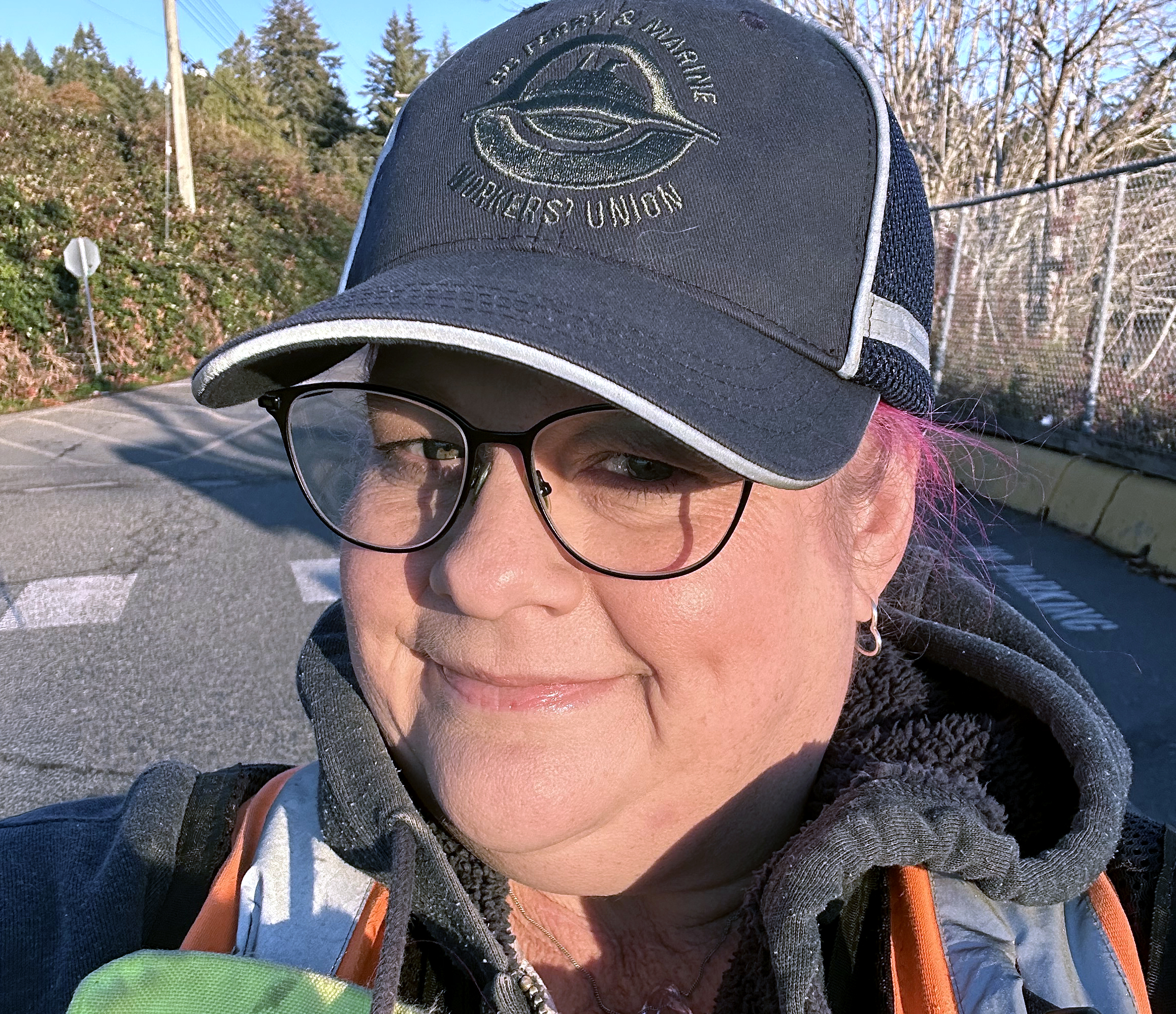
I started at BC Ferries in 1996, after working in home care and spending two years in the nursing program at Camosun. Caring for people has always been a big part of who I am. I like helping, and I’m good in a crisis. When something happens, my brain just kicks in. I know I need to get in there and do something, and I have the skills to help.
That carried over naturally into ferry work. Training becomes second nature. You’re always listening for bells, an alarm or a PA announcement, and you learn exactly what to do when it happens. No two days are ever the same. I like the challenge and the unexpected parts of the job. I also get to work in what I think is the most beautiful office there is, out on the water.
My role is a little unusual. I work both in the terminal and on the vessel. My office is on a boat, and I’ve spent 19 years holding emergency duty stations on ships. I’ve had passenger-control and emergency training, and with such a small crew on my route, I know I might needed to step in and do what I’ve been trained to do for 30 years.
The job is busy and physical. I sell tickets, handle payments, direct traffic, track vehicle counts and traffic and revenue statistics. There’s a lot happening at once.
I work on a route that serves two First Nations communities. For many people, the ferry is their connection to family, school, appointments and work. We’re part of the community, and we see that every day.
The people I work with have become a second family. When those alarm bells go, we’re there for each other.
Union work has been an important part of my career. I became a shop steward when I was about 24, only a few years into the job but it was my own workplace injury that gave me a firsthand look at how difficult it can be for a worker to navigate the system.
After a serious back injury, I was left trying to make sense of WorkSafe BC, medical leave and what came next. The union showed me that workers do not have to face those things alone.
Kevin Hall, my president at the time, encouraged me to get involved, supported me in training, and introduced me to worker advocacy and parliamentary procedure. I learned how much worker representation matters and why I wanted to be someone others could turn to when they needed help.
My proudest moment was being elected first vice-president of the union. I care deeply about making sure workers are heard and supported.
I’ve also valued working with BCFMWU President Eric McNeely. We both care deeply about doing right by members.
The biggest challenge I see is the lack of investment in transportation for the communities ferries serve. My route could use two vessels running from either side, but we can’t simply bring in a bigger boat. There isn’t room to stage it and we’re not a priority route when decisions are made.
We’re often overloaded and extremely busy. This summer, we had very little traffic assistance. That leaves workers trying to help people navigate a system they may never have used before, while regular customers are understandably frustrated by the delays. Sometimes those tensions start before passengers even reach the vessel.
Good service is never a waste. Ferries, hospitals and schools are public services. They should be about connecting people and supporting communities, not making a profit.
We need more service and better support for workers and passengers. We’re not just employees. We’re customers too, and community members. I love my job and my co-workers. I have one of the most unique jobs in the world, and I want the system to work better for all of us.