Remembering the Queen of the North
This week marks the anniversary of one of the darkest nights in B.C.’s coastal transportation history.
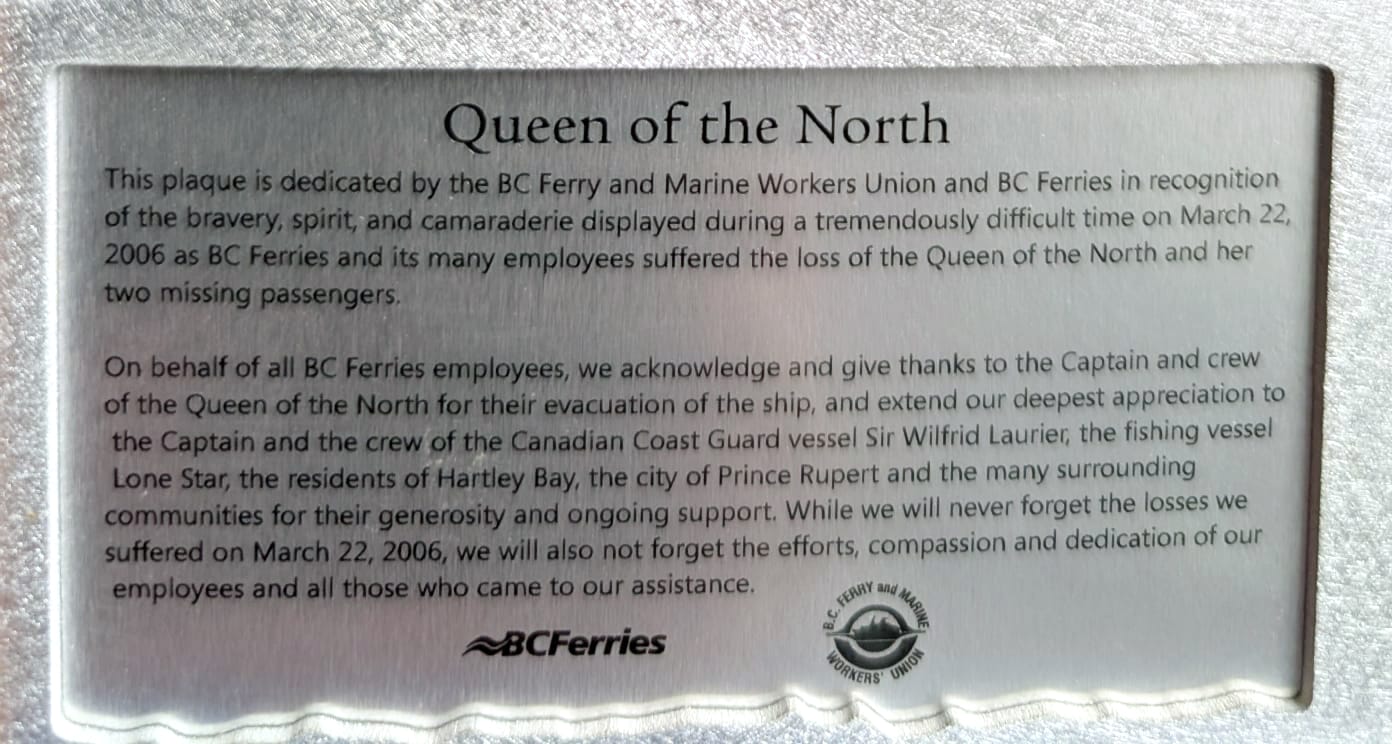
On March 22, 2006, the Queen of the North struck Gil Island in Wright Sound and sank in the early hours of the morning. Of the 101 passengers and crew on board, 99 survived. Two passengers, Gerald Foisy and Shirley Rosette, were never found.
In the moments after impact, the crew acted quickly to evacuate passengers, helping to prevent further loss of life.
Nearby fishing vessels were first on scene and assisted survivors in the water. The Gitga’at community of Hartley Bay mobilized to bring survivors ashore, opening their community hall and caring for them through the night while the coast guard led search and recovery efforts in challenging conditions.
Investigations later confirmed that the vessel missed a routine course change and continued for miles before striking Gil Island. The Transportation Safety Board concluded that safe navigation practices and bridge resource management weren’t followed and that company practices, fatigue, training and failures in safety management systems contributed to unsafe operations.
A navigating officer was later convicted in criminal court and sentenced to prison. The case also raised broader concerns across the marine industry about the criminalization of workers following major incidents.
But the sinking of the Queen of the North was never just about one person’s mistake. Major marine incidents are almost always the result of multiple failures, including systems, oversight, training and corporate culture.
Nearly two decades later, questions about accountability and the broader safety culture that allowed the disaster to occur still echo across the coast. For the families, those questions have never gone away.
In the years that followed, important safety improvements were made. BC Ferries and the union worked together to implement the SailSafe program, strengthening safety systems and support a just safety culture across the fleet.
Unfortunately, progress hasn’t been maintained. In 2023, the union withdrew from SailSafe after raising concerns that the program was moving away from its core safety purpose, pointing to the erosion of meaningful worker input, the weakening of site-based safety processes and a shift toward reporting “successes” instead of properly identifying risks, near-misses and other concerns.
For ferry workers, the anniversary is a reminder of the enormous responsibility crews carry every day. It’s also a reminder that safety at sea depends on strong systems, proper training and a culture where concerns can be raised without fear.
We remember those who were lost. We honour the crew, the first responders, the Gitga’at community of Hartley Bay and everyone who stepped forward when it mattered most.